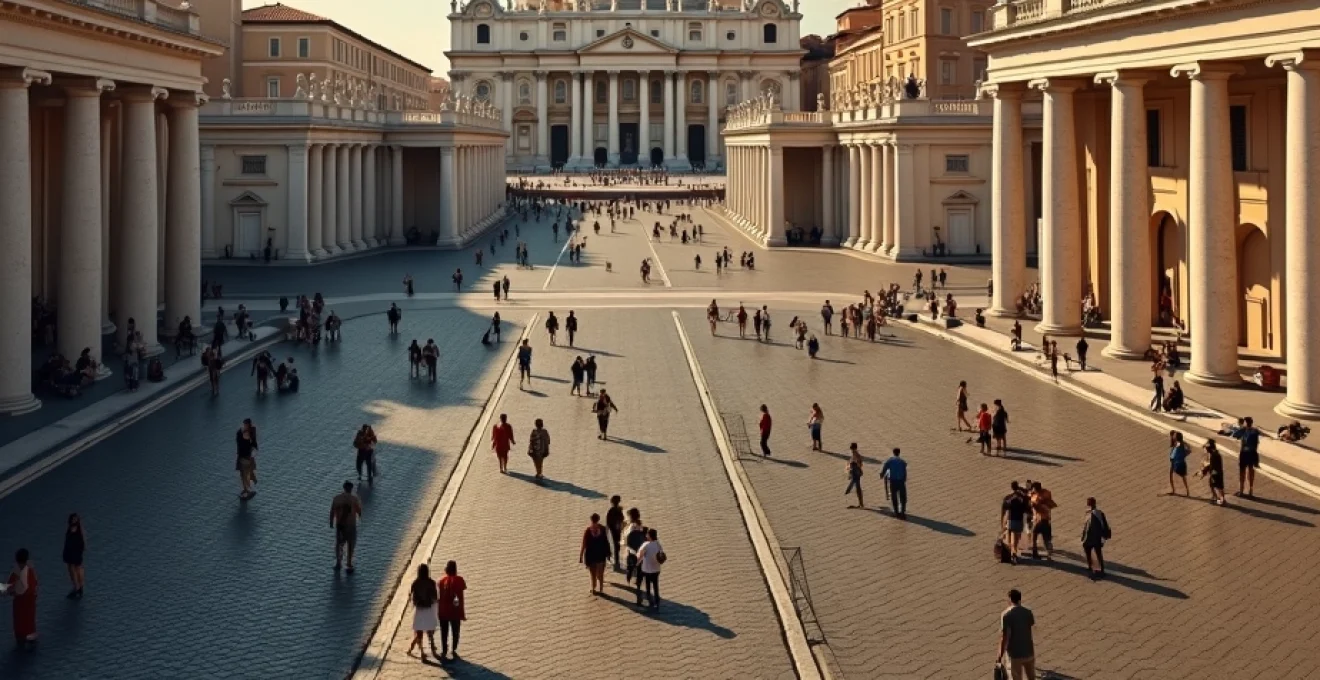
Rome stands as humanity’s greatest open-air museum, where millennia of artistic achievement converge in breathtaking harmony. The Eternal City offers culture enthusiasts an unparalleled journey through Western civilization’s most pivotal moments, from imperial grandeur to Renaissance brilliance. Every cobblestone street reveals layers of history, while world-class museums house treasures that shaped artistic traditions across continents.
Walking through Rome means stepping into a living testament to human creativity and ambition. The city’s cultural significance extends far beyond its famous monuments – it encompasses revolutionary architectural innovations, transformative artistic movements, and culinary traditions that continue influencing global gastronomy. For those seeking profound cultural immersion, Rome provides an inexhaustible source of wonder that rewards both casual visitors and dedicated scholars.
Ancient roman archaeological sites and imperial architecture
Rome’s ancient archaeological sites represent the pinnacle of imperial architectural achievement, showcasing engineering marvels that continue inspiring modern construction techniques. These monuments demonstrate how Roman civilization mastered both aesthetic beauty and structural innovation, creating lasting symbols of imperial power that transcended their original ceremonial purposes.
Colosseum underground chambers and hypogeum engineering
The Colosseum’s underground hypogeum reveals the sophisticated engineering systems that powered ancient Rome’s most spectacular entertainment venue. This subterranean network of chambers, corridors, and mechanical devices demonstrates how Roman architects created complex staging areas for gladiatorial contests and exotic animal displays. The hypogeum’s intricate pulley systems could lift wild beasts directly into the arena through trapdoors, creating dramatic surprises for audiences of 80,000 spectators.
Recent archaeological excavations have uncovered evidence of flooding mechanisms that allowed naval battle recreations, known as naumachiae . These discoveries illustrate the Colosseum’s versatility as an entertainment complex, where hydraulic engineering enabled diverse spectacles. The preservation of wooden elevator systems and animal holding cells provides invaluable insights into Roman crowd management and logistics.
Roman forum basilica julia and temple of vesta restoration
The Roman Forum’s Basilica Julia exemplifies imperial legal architecture, where Julius Caesar’s vision materialized into a monumental courthouse serving Rome’s complex judicial system. This massive structure housed multiple courtrooms simultaneously, with architectural features designed to accommodate hundreds of legal proceedings. The basilica’s restoration reveals sophisticated acoustic engineering that allowed speakers to address large crowds without amplification.
The Temple of Vesta stands as Rome’s most sacred religious site, where priestesses maintained the eternal flame symbolizing the city’s survival. Archaeological evidence shows continuous architectural modifications spanning eight centuries, reflecting evolving religious practices and imperial patronage. The circular design influenced countless religious buildings throughout the Roman world, establishing architectural precedents still visible in modern civic structures.
Pantheon oculus design and concrete dome construction techniques
The Pantheon’s revolutionary dome construction represents ancient Rome’s greatest architectural triumph, utilizing innovative concrete techniques that remained unmatched for over a millennium. The building’s oculus design creates a perfect interplay between light and shadow, transforming the interior space throughout each day’s progression. Roman engineers achieved this feat by gradually reducing concrete density from the dome’s base to its apex, using lightweight volcanic materials in upper sections.
The Pantheon’s proportional perfection – where height equals diameter – demonstrates mathematical precision that influenced Renaissance architects and continues inspiring contemporary designers. The unreinforced concrete dome spans 142 feet, a record that stood until modern steel construction techniques emerged. Visitors can observe how natural light streaming through the oculus illuminates different interior surfaces seasonally, creating an ever-changing celestial calendar.
Palatine hill augustus house frescoes and archaeological layers
Palatine Hill’s archaeological layers reveal Rome’s evolution from modest hilltop settlement to imperial capital, with Augustus’s house frescoes representing the finest examples of Roman domestic art. These remarkably preserved paintings showcase the Second Pompeian Style, featuring architectural illusions that expanded perceived interior space through trompe-l’oeil techniques. The frescoes demonstrate how imperial residences became showcases for artistic innovation and cultural refinement.
Recent excavations have uncovered evidence of Augustus’s modest lifestyle despite unlimited imperial resources, contradicting assumptions about Roman excess. The house’s relatively small scale reflects the emperor’s political strategy of maintaining republican appearances while consolidating unprecedented power. These discoveries provide intimate glimpses into daily life at the empire’s epicenter, where world-changing decisions occurred in surprisingly humble surroundings.
Vatican museums renaissance masterpieces and papal collections
The Vatican Museums house the world’s most extensive collection of Renaissance masterpieces, accumulated through centuries of papal patronage and religious devotion. These galleries represent Christianity’s greatest artistic legacy, where faith and creativity converged to produce humanity’s most transcendent works. The museums’ 54 distinct galleries contain over 70,000 catalogued pieces, making comprehensive exploration a lifetime endeavor even for dedicated art historians.
Sistine chapel michelangelo ceiling and last judgment analysis
Michelangelo’s Sistine Chapel ceiling transforms biblical narrative into visual poetry, where the artist’s revolutionary approach to human anatomy and divine representation redefined Western art. The nine central panels depicting Genesis required four years of back-breaking work, during which Michelangelo developed innovative painting techniques while lying on scaffolding. His ignudi figures – the nude male youths supporting the narrative scenes – demonstrate unprecedented anatomical mastery and artistic ambition.
The Last Judgment fresco, completed decades later, reveals Michelangelo’s evolved artistic philosophy and response to the Protestant Reformation. This monumental work depicts over 400 figures in a swirling composition that extends from floor to ceiling, creating visual drama that overwhelms viewers with its emotional intensity. The artist’s self-portrait, hidden within the flayed skin of Saint Bartholomew, reflects personal struggles with faith and mortality that permeate the entire composition.
Raphael rooms stanza della segnatura and school of athens
The Stanza della Segnatura represents Raphael’s artistic maturity, where classical philosophy and Christian theology harmoniously coexist within perfectly balanced compositions. The School of Athens demonstrates the artist’s ability to synthesize Renaissance humanism with traditional religious themes, creating an intellectual gathering that transcends temporal boundaries. Raphael’s inclusion of contemporary figures as classical philosophers – including Leonardo da Vinci as Plato and Michelangelo as Heraclitus – transforms historical narrative into artistic commentary on his era’s cultural achievements.
The room’s decorative program illustrates how Renaissance popes sought to legitimize Church authority through association with classical learning and philosophical tradition. Each fresco contributes to an overarching theme celebrating human knowledge and divine wisdom as complementary rather than contradictory forces. This sophisticated theological argument, expressed through visual means, influenced Catholic intellectual traditions for centuries.
Vatican pinacoteca caravaggio and leonardo da vinci works
The Vatican Pinacoteca houses Caravaggio’s revolutionary chiaroscuro techniques alongside Leonardo da Vinci’s unfinished masterpieces, creating dialogues between artistic generations that transformed European painting. Caravaggio’s dramatic light contrasts and psychological realism challenged conventional religious art, introducing street-level humanity into sacred narratives. His influence on subsequent Baroque painting cannot be overstated, as countless artists adopted his revolutionary approach to depicting divine subjects through common human experience.
Leonardo’s presence in the collection demonstrates the Vatican’s commitment to preserving Renaissance genius, despite the artist’s complex relationship with religious orthodoxy. His scientific observations and artistic innovations represent the Renaissance ideal of combining empirical investigation with creative expression. These works illustrate how papal patronage fostered artistic experimentation that advanced both spiritual understanding and secular knowledge.
Vatican library manuscript collections and codex vaticanus
The Vatican Library’s manuscript collections preserve humanity’s written heritage, including the Codex Vaticanus – one of Christianity’s oldest complete Bible texts. This 4th-century manuscript provides crucial evidence for biblical scholarship and textual criticism, offering insights into early Christian communities and theological development. The library’s 80,000 manuscripts span cultures and languages from across the medieval world, creating an unparalleled resource for understanding human intellectual history.
Renaissance humanists relied heavily on Vatican manuscript collections for their scholarly work, accessing Greek and Latin texts that had been lost elsewhere in Europe. The library’s preservation efforts ensured the survival of classical knowledge that might otherwise have disappeared during political upheavals and religious conflicts. These manuscripts continue supporting contemporary scholarship in fields ranging from history and theology to science and philosophy.
Capitoline museums classical sculpture and ancient roman artifacts
The Capitoline Museums represent the world’s oldest public museum complex, where classical sculpture and ancient Roman artifacts illuminate the artistic achievements of antiquity. Established in 1471, these museums demonstrate how Renaissance humanists viewed classical art as a source of inspiration and cultural legitimacy. The collection’s Marcus Aurelius equestrian statue – the only surviving example of its type – exemplifies Roman imperial portraiture and ceremonial art that influenced Western sculpture for millennia.
The museums’ layout reflects changing attitudes toward classical antiquity, from Renaissance reverence through Neoclassical scholarship to modern archaeological methodology. Visitors can trace how different historical periods interpreted and displayed ancient artifacts according to their cultural values and aesthetic preferences. The Dying Gaul sculpture demonstrates Roman artistic mastery in depicting foreign subjects with dignity and emotional complexity, challenging stereotypes about imperial cultural attitudes.
The Capitoline Venus and other classical sculptures reveal how Roman artists balanced Greek artistic traditions with innovative approaches to depicting the human form. These works influenced countless artists throughout European history, establishing aesthetic standards that persisted well into the modern era. The museums’ coin collections provide insights into Roman economic systems, imperial propaganda, and artistic evolution across centuries of political change.
The preservation and interpretation of classical artifacts requires balancing public access with conservation needs, ensuring that future generations can experience these irreplaceable cultural treasures.
Baroque roman churches and Counter-Reformation art movement
Rome’s Baroque churches represent the Catholic Counter-Reformation’s artistic response to Protestant criticism, creating immersive spiritual experiences that engaged all senses simultaneously. These sacred spaces demonstrate how religious architecture evolved to inspire emotional devotion and theological understanding through visual splendor. The movement’s emphasis on dramatic lighting, dynamic compositions, and emotional intensity transformed church interiors into theatrical stages for religious experience.
St. Peter’s basilica bernini baldachin and michelangelo pietà
Bernini’s monumental Baldachin transforms St. Peter’s Basilica into a Baroque masterpiece, where twisted bronze columns create dynamic movement within the vast interior space. This architectural sculpture demonstrates how Counter-Reformation artists sought to inspire awe through scale and material richness, using bronze stripped from the Pantheon’s ancient portico. The Baldachin’s spiral columns reference Solomon’s Temple, connecting Christian worship to Old Testament traditions through visual symbolism.
Michelangelo’s Pietà represents Renaissance sculpture at its most emotionally powerful, depicting the Virgin Mary cradling Christ’s lifeless body with sublime tenderness. Created when the artist was only 24, this masterpiece demonstrates unprecedented technical skill in rendering flowing drapery and idealized human forms. The sculpture’s placement within St. Peter’s creates a contemplative counterpoint to the Baroque exuberance surrounding it, illustrating how different artistic periods can coexist harmoniously within sacred space.
Santa maria della vittoria bernini ecstasy of saint teresa
Bernini’s Ecstasy of Saint Teresa epitomizes Baroque religious art, transforming mystical experience into tangible visual drama that engages viewers emotionally and spiritually. The sculpture’s theatrical setting, complete with hidden lighting and architectural framework, creates an immersive environment that blurs boundaries between art and reality. Saint Teresa’s expression of divine rapture demonstrates how Counter-Reformation artists depicted religious ecstasy as both spiritual and sensual experience.
The work’s controversial reception reflects broader cultural tensions between traditional religious restraint and Baroque emotional expressiveness. Critics questioned whether such sensual imagery appropriately conveyed sacred themes, while supporters argued that art should inspire genuine religious feeling through any effective means. This debate illustrates how artistic innovation often challenges established conventions, forcing societies to reconsider their aesthetic and theological assumptions.
Il gesù church baciccio ceiling frescoes and jesuit architecture
Il Gesù’s ceiling frescoes by Baciccio represent the pinnacle of Baroque illusionistic painting, where architectural boundaries dissolve into heavenly visions that seem to extend infinitely upward. The Jesuit mother church’s decorative program demonstrates how religious orders used art to communicate theological concepts to diverse audiences. Baciccio’s trompe-l’oeil techniques create the illusion that painted figures emerge from the ceiling into the church’s actual space, eliminating distinctions between representation and reality.
Jesuit architectural principles emphasized functionality and adaptability, creating worship spaces that could accommodate large congregations while facilitating clear sight lines and acoustic clarity. The church’s design influenced Catholic architecture worldwide, as Jesuit missionaries carried these architectural concepts to every continent. The integration of architecture, sculpture, and painting within Il Gesù established aesthetic standards that shaped religious art throughout the Baroque period.
Trastevere district medieval churches and renaissance villas
Trastevere’s medieval churches and Renaissance villas preserve Rome’s neighborhood-scale cultural heritage, where intimate sacred spaces and aristocratic residences reflect daily life across different historical periods. This district demonstrates how cultural enthusiasts can discover authentic Roman character beyond major tourist attractions. The area’s cobblestone streets and hidden piazzas create an atmospheric setting that enhances appreciation of architectural and artistic details often overlooked in grander monuments.
Santa Maria in Trastevere showcases medieval mosaic art that predates Renaissance innovations, offering insights into earlier Christian artistic traditions. The church’s 12th-century facade mosaics depict biblical scenes with Byzantine-influenced stylistic elements that reflect Rome’s connections to Eastern Christian culture. These works demonstrate how medieval artists balanced theological instruction with aesthetic beauty, creating devotional art that served both educational and inspirational purposes.
The district’s Renaissance villas, including Villa Farnesina, house important fresco cycles by Raphael and other master painters. These private residences reveal how wealthy patrons commissioned secular art that rivaled religious commissions in artistic quality and cultural significance. The villa’s decorative programs often incorporated classical mythology and contemporary political themes, reflecting Renaissance humanist culture that valued learning and artistic sophistication as markers of social status.
Exploring Trastevere’s cultural sites provides intimate encounters with Roman artistic heritage, where human-scaled spaces allow detailed observation of decorative techniques and stylistic evolution.
Roman culinary heritage and traditional osteria culture
Roman culinary heritage represents one of Europe’s most distinctive gastronomic traditions, where simple ingredients and time-tested techniques create dishes that embody cultural identity and historical continuity. Traditional osteria culture preserves cooking methods that have remained virtually unchanged for centuries, offering culture enthusiasts authentic experiences that complement architectural and artistic discoveries. The city’s food markets and family-run restaurants function as living museums where culinary traditions pass between generations through direct observation and participation.
Classic Roman dishes like carbonara, cacio e pepe, and saltimbocca demonstrate how limitations can inspire creativity, as traditional recipes developed from ingredients available to working-class families throughout the city’s history. These preparations reflect broader Roman cultural values emphasizing resourcefulness, family traditions, and appreciation for natural flavors enhanced through careful preparation rather than exotic ingredients. The quinto quarto tradition – utilizing every part of slaughtered animals – exemplifies Roman ingenuity in creating delicious dishes from supposedly inferior ingredients.
Contemporary Roman chefs balance respect for traditional techniques with creative innovation, ensuring that culinary culture continues evolving while maintaining its essential character. Wine traditions complement the cuisine, with regional varieties from Lazio providing perfect accompaniments to local specialties. The ritual of aperitivo culture creates social spaces where Romans gather to discuss daily life, politics, and cultural events, maintaining community connections that have defined urban life since ancient times.
Roman gastronomy offers culture enthusiasts an additional dimension of appreciation, where taste and tradition combine to create sensory memories that enhance understanding of local identity and historical continuity.