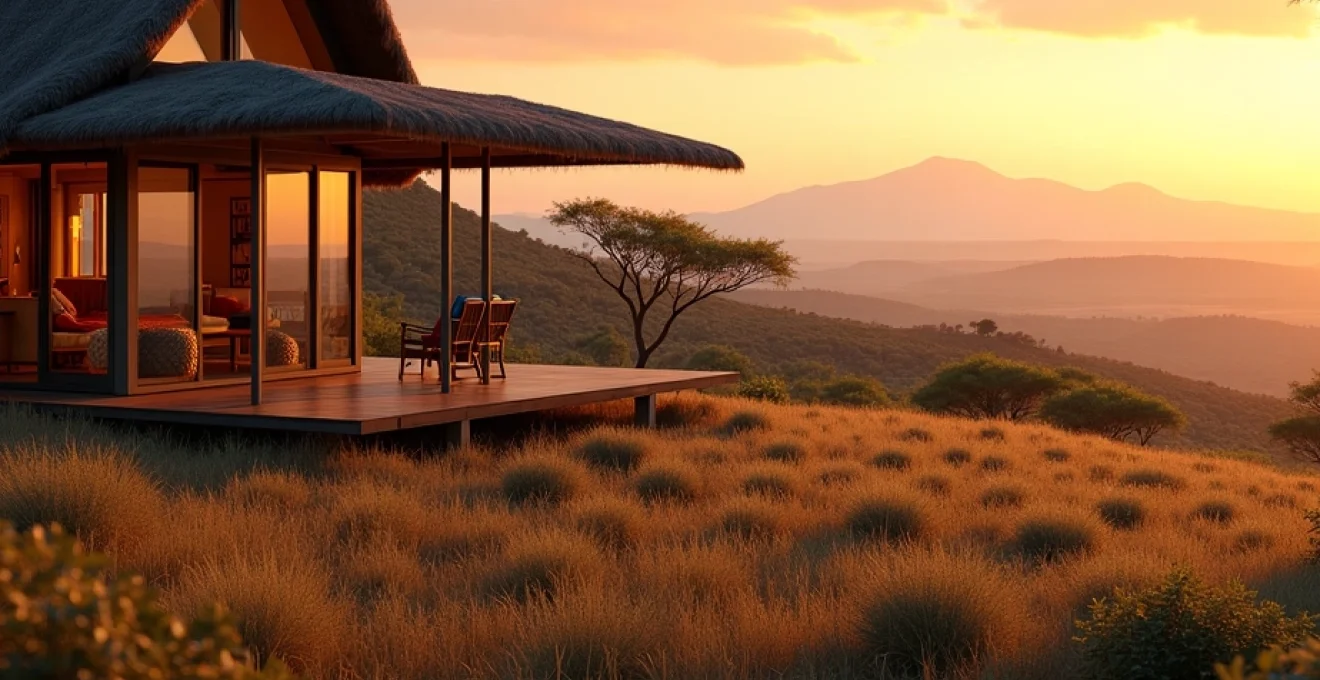
Tanzania stands as Africa’s premier safari destination, offering an unparalleled combination of diverse ecosystems, abundant wildlife, and world-class accommodation options that transform wildlife viewing into truly immersive experiences. The country’s safari lodges have evolved far beyond simple overnight stops, becoming sophisticated wildlife observation platforms strategically positioned to maximize animal encounters while providing exceptional comfort and service. From the legendary Serengeti plains where millions of wildebeest thunder across endless grasslands to the dramatic crater rim of Ngorongoro where the Big Five roam within a natural amphitheater, Tanzania’s lodge infrastructure represents the pinnacle of safari accommodation design.
Modern safari lodges in Tanzania leverage cutting-edge technology, architectural innovation, and decades of wildlife behavior research to create environments where guests can witness nature’s most spectacular displays from optimal vantage points. These facilities serve as more than accommodation; they function as wildlife research stations, photography workshops, and conservation education centers rolled into luxurious retreats that respect both the natural environment and local communities.
Northern circuit safari lodges: serengeti and ngorongoro crater accommodations
The Northern Safari Circuit represents Tanzania’s most celebrated wildlife viewing region, encompassing the world-famous Serengeti National Park and the UNESCO World Heritage Ngorongoro Conservation Area. This circuit attracts over 300,000 visitors annually, drawn by the promise of witnessing the Great Migration and experiencing some of Africa’s highest wildlife densities. Lodge developments in this region have reached unprecedented levels of sophistication, with properties designed specifically to capitalize on seasonal wildlife movements and permanent resident populations.
Strategic positioning within the Northern Circuit requires intimate knowledge of animal behavior patterns, migration routes, and seasonal feeding grounds. The most successful lodges maintain detailed wildlife databases spanning decades, allowing them to predict optimal viewing opportunities with remarkable accuracy. Properties like those found in the Western Corridor position themselves along river crossing points where dramatic predator-prey interactions unfold during migration seasons, while crater rim establishments provide year-round Big Five viewing opportunities regardless of seasonal variations.
Four seasons safari lodge serengeti: luxury elevated wildlife viewing
The Four Seasons Safari Lodge Serengeti exemplifies how architectural innovation can enhance wildlife viewing without compromising environmental integrity. Constructed on an elevated hillside overlooking the central Serengeti plains, this property utilizes natural topography to provide panoramic vistas that extend over 50 kilometers in every direction. The lodge’s design incorporates indigenous materials and traditional Maasai architectural elements while integrating modern amenities that rival urban five-star properties.
Each accommodation unit features floor-to-ceiling windows strategically angled to capture optimal lighting conditions for wildlife photography throughout the day. The property’s elevated infinity pool creates an illusion of floating above the Serengeti, while the main lodge’s observation decks provide 360-degree views of the surrounding ecosystem. During peak migration months, guests can observe herds numbering in the hundreds of thousands directly from their private terraces, creating an unparalleled sense of immersion in the natural world .
Ngorongoro crater lodge: crater rim positioning for big five encounters
Ngorongoro Crater Lodge represents perhaps the most dramatic safari lodge positioning in all of Africa, perched precariously on the rim of the world’s largest intact volcanic caldera. This unique geological formation creates a natural wildlife sanctuary spanning 260 square kilometers, with crater walls rising 600 meters above the crater floor. The lodge’s location at 2,400 meters elevation provides guests with breathtaking sunrise and sunset views over this natural amphitheater while offering immediate access to one of Africa’s most concentrated wildlife populations.
The crater floor supports approximately 30,000 large mammals year-round, including one of Africa’s densest lion populations and the critically endangered black rhinoceros. Lodge guests experience descent into the crater each morning like entering a lost world, with game drives conducted on the crater floor revealing wildlife densities that can exceed 500 animals per square kilometer in optimal areas. The lodge’s architectural design incorporates Maasai-inspired elements with contemporary luxury, creating spaces that frame the crater’s dramatic landscapes while providing protection from the highland climate’s temperature variations.
Singita grumeti reserves: private concession migration corridors
Singita Grumeti Reserves operates within a 140,000-hectare private concession that forms a crucial corridor for the Great Migration, connecting the Serengeti National Park with the Maasai Mara in Kenya. This exclusive access provides guests with unparalleled wildlife viewing opportunities away from crowded public areas, while supporting critical conservation initiatives that protect traditional migration routes. The reserve’s three distinct properties – Sasakwa Lodge, Sabora Tented Camp, and Faru Faru Lodge – each offer unique perspectives on the migration phenomenon.
The concession model allows for flexible game drive scheduling, off-road driving privileges, and specialized activities like walking safaris and night drives that enhance the authentic wilderness experience . Singita’s commitment to conservation excellence has resulted in measurable improvements in wildlife populations, with elephant numbers increasing by 300% and wild dog populations showing significant recovery since conservation management began. This success demonstrates how luxury tourism can serve as an effective conservation financing mechanism while providing guests with increasingly rare wildlife encounters.
Lemala ewanjan tented camp: mobile safari infrastructure during calving season
Lemala Ewanjan Tented Camp represents the evolution of mobile safari camping, utilizing lightweight yet luxurious infrastructure that can be repositioned seasonally to follow optimal wildlife viewing opportunities. During the Great Migration’s calving season from December through March, the camp positions itself in the southern Serengeti’s Ndutu region, where approximately 400,000 wildebeest calves are born within a six-week period. This strategic positioning provides guests with front-row seats to one of nature’s most spectacular events.
The camp’s mobile design philosophy extends beyond simple tent relocation, incorporating sustainable power systems, water treatment facilities, and waste management protocols that minimize environmental impact while maintaining luxury standards. Each tented accommodation features proper bathrooms, comfortable furnishings, and elevated viewing decks that provide optimal wildlife observation points. The camp’s mobility allows it to maintain intimate group sizes – typically accommodating no more than 16 guests – while accessing areas where permanent lodge construction would be environmentally inappropriate or legally prohibited.
Southern tanzania safari accommodations: ruaha and selous ecosystem lodges
Southern Tanzania represents Africa’s last great wilderness frontier, encompassing vast ecosystems that remain largely unexplored by mainstream tourism. The region includes Ruaha National Park, Tanzania’s largest national park covering 20,226 square kilometers, and the newly designated Nyerere National Park (formerly the northern section of Selous Game Reserve), which spans 30,893 square kilometers. These protected areas support Africa’s largest elephant populations, with Ruaha alone hosting approximately 12,000 elephants, while the combined ecosystems provide critical habitat for endangered species including African wild dogs, sable antelopes, and Lichtenstein’s hartebeest.
Lodge development in southern Tanzania emphasizes authentic bush experiences over luxury amenities, though many properties successfully combine rustic charm with sophisticated comfort levels. The region’s remoteness requires lodges to operate with greater self-sufficiency, often generating their own power, treating their own water, and maintaining extensive supply chains to support operations far from urban centers. This isolation creates opportunities for genuine wilderness experiences that have become increasingly rare in more accessible safari destinations, allowing guests to experience Africa much as early explorers encountered it decades ago.
Jabali ridge lodge: kopje integration architecture in ruaha national park
Jabali Ridge Lodge demonstrates exceptional architectural integration with its natural environment, built into and around massive granite kopjes that rise dramatically from the Ruaha landscape. The lodge’s design philosophy embraces the existing rock formations, creating a property that appears to emerge organically from the ancient geological structures rather than imposing foreign architectural elements on the natural environment. This approach not only minimizes environmental impact but also creates unique viewing opportunities from elevated positions that would be impossible to achieve through conventional construction methods.
Each of the lodge’s eight bandas (accommodations) is positioned to maximize privacy while providing panoramic views across the vast Ruaha ecosystem. The main lodge’s infinity pool appears to flow directly into the valley below, creating a visual connection between guests and the wildlife that frequents the seasonal river systems. During dry season months from June through October, the lodge’s elevated position provides excellent wildlife viewing as animals concentrate around remaining water sources, with elephants, lions, and rare antelope species regularly visible from the main lodge areas without requiring game drive participation.
Sand rivers selous: rufiji river frontage for hippo and crocodile observation
Sand Rivers Selous occupies a premier position along the banks of the mighty Rufiji River, Tanzania’s largest river system that drains approximately one-third of the country’s land area. The lodge’s riverside location provides unparalleled opportunities for observing aquatic wildlife behavior, with resident populations of hippos and Nile crocodiles visible throughout the day from elevated viewing areas. The Rufiji system supports over 2,000 hippos within the greater Selous ecosystem, creating opportunities for intimate behavioral observations that extend far beyond simple wildlife spotting.
The property’s design maximizes river frontage utilization, with each guest cottage positioned to provide direct river views while maintaining privacy and comfort. Evening activities include boat safaris along the Rufiji system, where guests can approach wildlife from unique aquatic perspectives impossible during land-based game drives. The river environment supports exceptional bird diversity, with over 440 species recorded within the immediate area, making Sand Rivers an exceptional destination for avian photography and birding enthusiasts . Night sounds from the river create an authentic African soundscape, with hippo grunts, crocodile splashes, and nocturnal bird calls providing constant reminders of the vibrant ecosystem surrounding guest accommodations.
Kwihala camp: baobab forest positioning for elephant migration routes
Kwihala Camp’s strategic positioning within Ruaha’s ancient baobab forests provides guests with unique opportunities to observe elephant behavior in one of Africa’s most iconic landscapes. The camp sits along traditional elephant migration corridors that have been used for centuries, with massive baobab trees serving as landmarks and seasonal food sources for these magnificent creatures. During the dry season, elephants strip baobab bark for its moisture content, creating dramatic interactions between Africa’s largest mammals and its most distinctive trees.
The camp’s six luxury tents are positioned to minimize disturbance to traditional elephant pathways while providing optimal viewing opportunities when herds pass through the area. Each accommodation features elevated platforms that place guests at eye level with adult elephants, creating intimate encounters that feel both safe and authentic. The camp’s naturalist guides possess decades of experience tracking elephant family groups, enabling them to predict herd movements with remarkable accuracy and position guests for optimal photography and observation opportunities. Research conducted at the camp contributes to ongoing elephant conservation efforts, with guest participation helping to fund GPS collaring projects and anti-poaching initiatives.
Roho ya selous: authentic bush camp design for walking safari operations
Roho ya Selous represents the pinnacle of authentic bush camp design, emphasizing connection with the natural environment over luxury amenities while maintaining comfortable accommodations that enhance rather than distract from the wilderness experience. The camp’s design philosophy centers on minimizing the barrier between guests and their environment, utilizing natural materials, earth-toned color schemes, and architectural elements that blend seamlessly with the surrounding miombo woodland. This approach creates an immediate sense of immersion in pristine African wilderness that begins the moment guests arrive.
Walking safaris represent the camp’s specialty, with professional guides leading small groups on multi-day expeditions that explore areas inaccessible by vehicle. These walking adventures provide opportunities to track wildlife on foot, observe smaller ecosystem components often overlooked during vehicle-based safaris, and develop a deeper understanding of ecological relationships that define African ecosystems. The camp maintains a fly camp infrastructure that allows for overnight wilderness expeditions, where guests sleep under mosquito nets beneath star-filled skies with only canvas between them and the sounds of nocturnal Africa. This approach appeals particularly to experienced safari travelers seeking authentic wilderness experiences that transcend conventional game drive activities.
Specialized safari lodge infrastructure for enhanced wildlife photography
Modern safari lodges increasingly cater to the growing population of serious wildlife photographers, incorporating specialized infrastructure designed to optimize photographic opportunities while respecting wildlife behavior patterns and habitat requirements. Professional wildlife photography requires specific environmental conditions, including optimal lighting angles, unobstructed sight lines, behavioral prediction capabilities, and extended observation periods that differ significantly from general wildlife viewing requirements. Lodge developers now work closely with professional photographers and wildlife behaviorists to create facilities that enhance rather than compromise photographic potential.
Photography-focused lodge infrastructure represents a significant investment in specialized equipment and facility design, with many properties allocating 15-20% of their total construction budgets to photography-specific amenities. These investments include professional camera equipment rental programs, on-site photography instruction facilities, digital processing laboratories, and specialized vehicle modifications that transform standard game drive vehicles into mobile photography platforms. The most sophisticated properties employ resident professional photographers who provide technical instruction, location guidance, and post-processing assistance to guests seeking to improve their wildlife photography skills.
Professional photography hide construction at mwiba lodge
Mwiba Lodge’s photography hide represents the pinnacle of specialized wildlife photography infrastructure, featuring a purpose-built underground observation facility positioned at a natural water source that attracts diverse wildlife species throughout the day. The hide’s construction required extensive environmental impact assessment and wildlife behavior analysis to ensure positioning would not disrupt natural water access patterns or create unnatural wildlife congregation points that could negatively impact ecosystem dynamics.
The facility accommodates up to six photographers simultaneously, with individual shooting positions equipped with adjustable camera supports, power outlets for equipment charging, and communication systems that allow coordination without disturbing wildlife subjects. Specialized glass panels provide optical clarity equivalent to professional camera lenses while remaining completely invisible to approaching animals. The hide’s ventilation system operates silently to prevent human scent from alerting wildlife, while climate control systems maintain comfortable conditions during extended photography sessions. Interior lighting utilizes red spectrum bulbs that don’t disturb nocturnal animals, allowing for extended evening and early morning photography sessions when wildlife activity peaks.
Vehicle modification standards for safari game drives
Safari vehicle modifications for enhanced wildlife photography have evolved into a specialized engineering discipline, with leading lodges investing significantly in custom vehicle development that maximizes photographic opportunities while maintaining safety and environmental compliance standards. Standard modifications include roof hatch enlargement to accommodate telephoto lenses, vibration dampening systems to eliminate camera shake, power inverters for equipment charging, and specialized seating configurations that provide stable shooting platforms at multiple angles.
Advanced vehicle modifications incorporate gyroscopic stabilization systems that counteract vehicle movement during wildlife approaches, allowing photographers to achieve sharp images even when following moving subjects across rough terrain. Some lodges employ vehicles with silent electric drive systems for predator tracking, reducing engine noise that might disturb behavioral observations or photographic compositions. Professional guide training now includes technical photography instruction , with guides learning to anticipate optimal lighting conditions, predict animal behavior patterns, and position vehicles for maximum photographic impact. Vehicle capacity is often reduced from standard tourism configurations to provide photographers with additional equipment storage and working space necessary for professional-quality results.
Elevated observation deck engineering at sanctuary kusini
Sanctuary Kusini’s elevated observation deck represents innovative engineering solutions for wildlife photography infrastructure, incorporating hydraulic elevation systems that allow photographers to adjust viewing height based on specific photographic requirements and wildlife positioning. The deck’s design utilizes carbon fiber construction materials that provide exceptional stability while minimizing weight and environmental impact, with foundations that extend deep into rocky substrate to eliminate vibration transfer that could compromise long-telephoto photography.
The observation platform accommodates specialized photography equipment including remote camera systems, motion-activated trail cameras, and time-lapse photography installations that document wildlife behavior patterns over extended periods. Integrated weather monitoring systems provide real-time atmospheric data crucial for predicting optimal photography conditions, while automated wildlife detection sensors alert photographers to approaching subjects before they become visible to human observers. The deck’s positioning overlooks traditional wildlife corridors and seasonal feeding areas, with detailed behavioral studies conducted to identify optimal photography timing for different species throughout daily and seasonal cycles.
Night vision equipment integration for nocturnal species documentation
Advanced safari lodges increasingly integrate sophisticated night vision and thermal imaging equipment to provide guests with opportunities to observe and photograph nocturnal wildlife behavior that remains invisible during standard daytime game drives. Thermal imaging technology reveals heat signatures of mammals, birds, and even large reptiles, allowing identification and tracking of species that would otherwise remain completely hidden in darkness. This technology opens entirely new dimensions of wildlife observation, particularly for predator behavior documentation and small mammal species identification.
Professional-grade night vision systems utilize infrared illumination that remains invisible to most wildlife species, allowing for extended nocturnal observation sessions without behavioral disruption. Some lodges maintain permanent night vision installations at water sources and known predator territories, with live feeds available in guest accommodations for those preferring comfortable indoor observation. Thermal imaging equipment reveals thermoregulation behavior, predator-prey interactions, and social dynamics that occur exclusively during nighttime hours, providing insights into ecosystem complexity that daytime observations cannot reveal. Guest training programs teach proper night vision equipment operation while emphasizing ethical guidelines for nocturnal wildlife observation that prioritize animal welfare over photographic opportunities.
Conservation-based lodge operations: community conservancy partnerships
Conservation-based lodge operations represent a fundamental shift in safari tourism philosophy, transforming luxury accommodations from simple wildlife viewing platforms into active conservation financing mechanisms that directly support ecosystem protection and community development initiatives. These partnerships between private tourism operators and local communities create sustainable economic models where tourism revenue directly funds wildlife protection, habitat restoration, and community empowerment programs. The most successful conservancy partnerships demonstrate measurable conservation outcomes while providing local communities with long-term economic benefits that exceed traditional land use alternatives.
Community conservancy partnerships typically involve long-term lease agreements where local communities retain land ownership while granting exclusive tourism rights to lodge operators in exchange for guaranteed revenue streams, employment opportunities, and infrastructure development. These arrangements create powerful incentives for wildlife protection, as communities directly benefit from healthy ecosystems that attract tourists. Successful conservancy models often result in wildlife population increases, habitat restoration, and reduced human-wildlife conflict as communities become active stakeholders in conservation rather than competitors with wildlife for land use.
The Northern Rangelands Trust model, while primarily based in Kenya, has influenced similar initiatives in northern Tanzania where Maasai communities partner with luxury lodge operators to protect traditional grazing areas that serve as crucial wildlife corridors. These partnerships typically generate 10-15% of tourism revenue directly to community development funds, with additional benefits including employment preferences for community members, educational scholarships, and healthcare facility development. Lodge operations provide training opportunities in hospitality, conservation, and business management that create career pathways extending beyond tourism into broader economic development.
Monitoring and evaluation systems track both conservation and community development outcomes, with annual reports documenting wildlife population trends, habitat condition assessments, and community economic indicators. The most sophisticated partnerships employ third-party auditing systems that ensure transparency and accountability in fund distribution and impact measurement. These comprehensive approaches demonstrate how luxury tourism can serve as an effective conservation financing mechanism while creating sustainable economic opportunities for rural communities that might otherwise face limited development alternatives.
Seasonal migration calendar: lodge positioning for wildebeest movement patterns
Understanding the Great Migration’s seasonal patterns represents perhaps the most critical factor in safari lodge positioning and guest experience optimization throughout Tanzania’s northern circuit. The migration follows a predictable annual cycle driven by rainfall patterns, grass nutritional quality, and calving requirements that have remained consistent for thousands of years. Lodge operators who successfully predict and position themselves according to these patterns provide guests with dramatically superior wildlife viewing opportunities while maximizing occupancy rates during peak viewing seasons.
The migration calendar begins in December when approximately 1.5 million wildebeest move into the southern Serengeti’s short-grass plains around Lake Ndutu for calving season. During this period from December through March, specialized mobile camps position themselves in the Ndutu region to provide access to calving activities where up to 8,000 calves may be born daily during peak periods. The abundance of vulnerable young attracts predators including lions, cheetahs, and hyenas, creating exceptional opportunities for dramatic wildlife photography and behavioral observation that define many visitors’ most memorable safari experiences.
From April through June, the herds begin their northwestern movement toward the Western Corridor, crossing the Grumeti River system where dramatic river crossing scenes unfold as hundreds of thousands of animals navigate crocodile-infested waters. Lodge positioning during this period focuses on river crossing points, with some properties maintaining multiple camps that can be activated based on specific crossing locations that vary annually depending on water levels and grass conditions. The unpredictability of exact crossing timing creates challenges for lodge operations but provides opportunities for authentic wildlife encounters that cannot be replicated in more predictable wildlife viewing scenarios.
The northern phase of the migration occurs from July through October, when herds move into the northern Serengeti and cross into Kenya’s Maasai Mara. Northern Serengeti lodges position themselves along the Mara River, where spectacular crossing scenes rival those of the Western Corridor but occur in different environmental contexts that provide unique photographic and behavioral observation opportunities. Return migration begins in November as herds move south toward calving grounds, completing the annual cycle that has sustained East Africa’s grassland ecosystems for millennia. Lodge operators who understand these patterns and position their properties accordingly can guarantee guests optimal wildlife viewing regardless of travel dates, while those who ignore migration timing risk providing suboptimal experiences during peak tourism seasons.
Tanzania safari lodge certification standards: TATO and green tourism compliance
Tanzania Association of Tour Operators (TATO) certification represents the gold standard for safari lodge operations, establishing comprehensive criteria that ensure safety, environmental compliance, and service quality standards across all aspects of lodge operations. TATO certification requires annual inspections covering infrastructure safety, staff training protocols, environmental impact management, and guest service standards that must meet or exceed internationally recognized hospitality benchmarks. Properties seeking TATO certification must demonstrate compliance with Tanzanian wildlife protection laws, building codes, and environmental regulations while maintaining service levels comparable to international luxury hospitality standards.
Green tourism compliance extends beyond basic environmental protection to encompass sustainable tourism practices that minimize ecological footprints while maximizing positive community impacts. Certified properties must demonstrate measurable environmental performance including energy efficiency targets, water conservation systems, waste reduction protocols, and carbon footprint management strategies. Solar power systems, water recycling facilities, and organic waste management represent standard requirements for green certification, with many properties achieving complete carbon neutrality through renewable energy systems and carbon offset programs that fund reforestation and community development initiatives.
Staff training requirements for certified properties include wildlife behavior education, emergency response protocols, first aid certification, and cultural sensitivity training that ensures guest interactions respect both international hospitality standards and local cultural values. Guide certification programs require extensive natural history education, tracking skills development, and ongoing professional development that keeps guides current with evolving wildlife research and conservation practices. These training investments create career advancement opportunities for local staff while ensuring guests receive expert guidance that enhances their safari experience quality and educational value.
Compliance monitoring involves quarterly inspections, annual certification renewals, and guest feedback analysis that identifies performance trends and improvement opportunities. Properties maintaining certification demonstrate consistent excellence in safety, service, and environmental stewardship that provides guests with confidence in their accommodation choices while supporting Tanzania’s reputation as Africa’s premier safari destination. The certification process creates competitive advantages for compliant properties while raising industry standards that benefit all stakeholders including guests, local communities, and wildlife conservation efforts throughout Tanzania’s protected area systems.