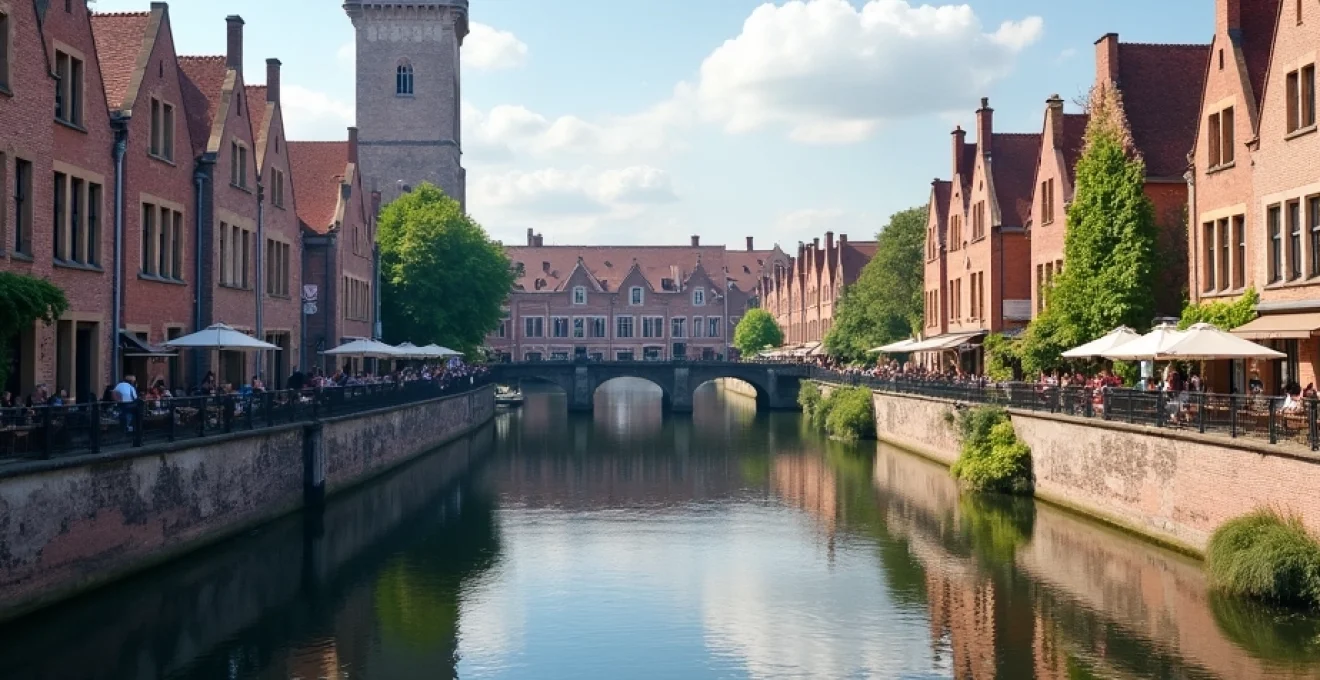
Nestled in the heart of Belgium’s West Flanders province, Bruges stands as one of Europe’s most perfectly preserved medieval cities, where centuries-old architecture reflects in tranquil canals and cobblestone streets echo with the footsteps of countless visitors drawn to its timeless beauty. This UNESCO World Heritage site has earned its reputation as the “Venice of the North” through an extraordinary combination of Gothic architecture, masterful urban planning, and an intricate network of waterways that once powered one of medieval Europe’s most prosperous trading centers. The city’s remarkable preservation allows modern visitors to experience authentic medieval atmosphere while enjoying world-class museums, artisanal craftsmanship traditions, and culinary heritage that continues to flourish within its historic walls.
Medieval urban planning architecture of bruges historic city center
The historic center of Bruges represents one of the finest examples of medieval urban planning in Northern Europe, where carefully designed street layouts and architectural regulations created a harmonious cityscape that has endured for over eight centuries. The city’s development followed organic patterns that maximized both defensive capabilities and commercial efficiency, with main thoroughfares radiating from the central Market Square toward strategic gates in the defensive walls. This radial street system facilitated the movement of goods and people while creating natural gathering spaces at intersections, fostering the vibrant commercial culture that made Bruges a medieval trading powerhouse.
Archaeological evidence reveals that Bruges’ urban planners employed sophisticated zoning principles, designating specific areas for different trades and social classes while ensuring adequate access to the canal network for all residents. The consistent building heights, standardized lot sizes, and unified architectural styles reflect municipal regulations that prioritized community harmony over individual expression. These planning principles created the visual coherence that makes Bruges so photographically compelling today, where every street corner offers a perfectly composed medieval tableau.
Flemish gothic cathedral of saint salvator and basilica of holy blood
Saint Salvator Cathedral showcases the evolution of Flemish Gothic architecture from its early 13th-century origins through subsequent renovations that added increasingly elaborate decorative elements. The cathedral’s imposing brick tower, rising 99 meters above the city, demonstrates the technical mastery of medieval builders who created soaring vertical spaces using locally available materials. Inside, the nave’s pointed arches and ribbed vaulting distribute structural loads efficiently while creating the sense of upward movement characteristic of Gothic design.
The Basilica of the Holy Blood presents a fascinating architectural contrast, combining Romanesque lower chapel construction with Gothic upper chapel modifications. This dual-level design reflects the relic’s sacred importance, with the ground-floor chapel serving daily worship needs while the ornate upper level houses the precious relic believed to contain Christ’s blood. The basilica’s modest exterior dimensions belie the richness of its interior decorations, including intricate wood carvings and stained glass that create an atmosphere of profound spiritual reverence.
Belfry of bruges UNESCO world heritage tower construction techniques
The Belfry of Bruges stands as a masterpiece of medieval engineering, its 83-meter height achieved through innovative construction techniques that balanced structural stability with the tower’s symbolic importance as a representation of civic independence. Medieval builders employed a sophisticated understanding of load distribution, using progressively thicker walls at the base that taper toward the top while incorporating internal buttressing systems that counteract lateral forces from wind and the tower’s own weight.
Construction records indicate that builders used locally quarried limestone for the foundation and imported Flemish brick for the upper sections, creating a structure that could withstand both seismic activity and the thermal expansion cycles that cause many tall buildings to crack over time. The tower’s internal wooden framework, which supports the famous 47-bell carillon, represents advanced carpentry techniques that allow the entire structure to flex slightly during bell ringing while maintaining structural integrity.
Market square guildhall facades and merchant house typology
The Market Square’s surrounding buildings represent a comprehensive catalog of Flemish merchant house architecture, where standardized construction techniques created visual harmony while allowing individual expression through decorative details. These buildings typically feature narrow street frontages that maximized valuable commercial space while extending deep into city blocks, with ground floors designed for shop displays and upper levels serving as workshops and family residences.
Guild regulations influenced architectural features throughout the square, requiring specific window proportions, roofline configurations, and facade materials that reflected each building owner’s trade and social status. The stepped gable rooflines that characterize Bruges architecture served both practical and aesthetic purposes, facilitating rainwater drainage while creating the distinctive silhouette that makes the city instantly recognizable in photographs and paintings.
Defensive medieval wall system and kruispoort gate preservation
Bruges’ medieval defensive system represents sophisticated military engineering adapted to the city’s unique position surrounded by waterways and marshy terrain. The Kruispoort Gate, one of the few surviving original entrances, demonstrates how medieval builders integrated defensive architecture with daily commercial needs, featuring massive wooden doors reinforced with iron bands and equipped with portcullis systems that could quickly seal the entrance during attacks.
Archaeological investigations have revealed that the defensive walls incorporated water management systems that could flood surrounding areas during sieges while maintaining dry passages for defenders. These hydraulic defensive features worked in conjunction with the natural canal network to create an integrated protection system that made Bruges virtually impregnable during its medieval heyday, contributing to the city’s ability to maintain its prosperity through centuries of European conflicts.
Bruges canal network engineering and waterway management systems
The canal network of Bruges represents one of medieval Europe’s most sophisticated urban water management systems, where natural waterways were enhanced and expanded through careful engineering to create a comprehensive transportation and sanitation infrastructure. The system’s design reflects deep understanding of hydraulic principles, with strategically placed locks, weirs, and channels that maintain consistent water levels while accommodating the tidal influences from the North Sea connection. This engineering marvel enabled Bruges to function as a major international port despite being located several kilometers inland, with seagoing vessels able to navigate directly into the city center through carefully maintained deep-water channels.
Modern hydrological analysis reveals the system’s remarkable efficiency in managing both commercial traffic and urban waste disposal, with flowing water naturally carrying away sewage and industrial byproducts while providing fresh water for daily needs. The canal network’s multiple interconnected loops created redundancy that ensured continuous operation even when individual sections required maintenance or became blocked by ice during harsh winters. This reliability made Bruges an attractive location for international merchants who needed dependable transportation for valuable goods like spices, textiles, and precious metals.
Dijver canal route and rozenhoedkaai photographic vantage points
The Dijver Canal serves as Bruges’ most scenic waterway, offering visitors unobstructed views of medieval architecture reflected in calm waters that have remained virtually unchanged for centuries. This particular route became famous among photographers and artists because it provides multiple vantage points where the city’s most iconic buildings appear in perfect composition with their mirror images in the water below.
Rozenhoedkaai, literally translated as “Rosary Quay,” occupies a strategic position where multiple waterways converge, creating the panoramic vista that appears on countless postcards and travel brochures. The viewing angle from this location captures the Belfry tower rising above a collection of guild houses whose architectural details become even more striking when doubled by their reflections, creating a sense of depth and symmetry that exemplifies Bruges’ photogenic appeal.
Minnewater lake hydraulic engineering and lock mechanisms
Minnewater Lake demonstrates medieval hydraulic engineering at its most sophisticated, where artificial lake creation served multiple practical purposes while creating one of Bruges’ most romantic destinations. The lake’s construction required precise calculation of water flow rates and storage capacity to ensure adequate water supply for the city’s mills and workshops while providing flood control during heavy rainfall periods.
The lock mechanisms connecting Minnewater to the main canal system represent advanced medieval technology, with wooden gate systems and bronze fittings that allowed precise water level control. These locks enabled boats of various sizes to navigate between different elevation levels while maintaining consistent water depth throughout the network, demonstrating the engineering expertise that made Bruges’ commercial success possible.
Groenerei canal medieval trade route infrastructure
Groenerei Canal functioned as one of Bruges’ primary commercial arteries during the medieval period, with specialized loading facilities and warehouse access points that streamlined the transfer of goods between water transport and land-based distribution systems. The canal’s strategic positioning allowed direct access to the city’s main trading districts while maintaining sufficient depth for heavily loaded cargo vessels.
Archaeological evidence reveals sophisticated harbor infrastructure along Groenerei, including stone quays with iron mooring rings, covered loading areas that protected valuable goods from weather damage, and standardized measurement markers that facilitated trade negotiations. These facilities enabled Bruges merchants to handle enormous volumes of international commerce efficiently, contributing to the city’s reputation as Northern Europe’s most reliable trading center.
Wollestraat waterway commercial navigation patterns
The Wollestraat waterway demonstrates how medieval urban planners integrated commercial navigation requirements with residential neighborhood needs, creating a system where merchant vessels could access warehouse districts without disrupting daily life in surrounding areas. Navigation patterns along this route followed established protocols that prioritized larger commercial vessels during morning hours while reserving afternoon periods for local traffic and smaller boats.
Historical records indicate that Wollestraat featured specialized mooring areas designed for different types of cargo, with deeper sections reserved for grain barges and shallower areas used by textile merchants whose goods required protection from water damage. These navigation management systems prevented congestion while ensuring that all traders could access necessary facilities efficiently.
Canal tour boat operations and waterway traffic management
Modern canal tour operations in Bruges follow carefully regulated patterns designed to preserve the waterways’ historical integrity while accommodating thousands of visitors daily. Tour boat operators must navigate the same narrow channels that medieval merchants used, requiring specialized knowledge of water depth variations, bridge clearances, and seasonal flow patterns that affect navigability.
Contemporary traffic management systems coordinate tour boat schedules with maintenance operations and private boat usage, ensuring that the canals continue functioning as living waterways rather than merely tourist attractions. These operations provide sustainable economic benefits to local communities while offering visitors authentic experiences of medieval water transportation methods, creating a perfect balance between preservation and accessibility.
Bruges lace making industry heritage and textile craftsmanship traditions
The lace making industry of Bruges represents one of Europe’s most refined textile craftsmanship traditions, where generations of skilled artisans developed techniques that produced luxury goods coveted by royalty and wealthy merchants across the continent. Bruges lace became synonymous with exceptional quality due to the city’s unique combination of favorable climate conditions, access to the finest linen threads, and guild systems that maintained rigorous quality standards through centuries of production. The intricate patterns and delicate construction methods required years of apprenticeship to master, creating a specialized workforce that could produce textiles of extraordinary beauty and durability.
Historical records reveal that lace production provided economic opportunities for thousands of women in Bruges, creating one of medieval Europe’s most significant female-dominated industries. The craft’s complexity demanded intense concentration and exceptional manual dexterity, with master lace makers capable of creating patterns so intricate that they appeared almost magical to contemporary observers. This reputation for excellence attracted commissions from European courts and wealthy merchant families, generating substantial export revenue that contributed significantly to Bruges’ medieval prosperity.
Modern lace making in Bruges continues traditional methods while adapting to contemporary market demands, with local artisans producing both historical reproductions and innovative contemporary designs. Specialized workshops and demonstration centers allow visitors to observe the intricate processes involved in creating handmade lace, from the initial pattern design through the complex weaving techniques that transform simple threads into elaborate decorative textiles. These educational programs ensure that traditional knowledge continues passing to new generations while maintaining the high standards that made Bruges lace internationally famous.
The precision and artistry required for traditional Bruges lace making represents one of humanity’s most demanding textile crafts, where a single mistake can compromise weeks of meticulous work.
Contemporary lace production faces challenges from mass-produced alternatives and changing fashion preferences, but dedicated artisans and cultural preservation organizations work actively to maintain this irreplaceable heritage. Training programs and apprenticeship opportunities attract students from around the world who seek to master these traditional techniques, ensuring that Bruges lace making knowledge remains vibrant and accessible for future generations.
Belgian chocolate manufacturing districts and artisanal production methods
Bruges chocolate manufacturing represents the pinnacle of Belgian confectionery excellence, where traditional production methods combine with innovative flavor combinations to create products that define luxury chocolate worldwide. The city’s chocolate districts feature numerous artisanal workshops where master chocolatiers employ time-honored techniques including manual tempering, hand-dipping, and decorative finishing that require years of training to perfect. These specialized production methods distinguish Bruges chocolate from mass-produced alternatives, creating products with superior texture, flavor complexity, and visual appeal that justify premium pricing in international markets.
The chocolate manufacturing process in Bruges begins with careful selection of cacao beans from specific geographic regions, with many chocolatiers maintaining direct relationships with plantation owners to ensure consistent quality and ethical sourcing practices. Roasting, grinding, and conching processes follow traditional Belgian methods that develop the deep, complex flavors characteristic of premium chocolate while maintaining the smooth texture that makes Belgian chocolate instantly recognizable to discerning consumers.
Artisanal chocolate shops throughout Bruges offer visitors opportunities to observe production processes firsthand, with many establishments featuring glass-walled workshops where skilled craftspeople demonstrate techniques like truffle rolling, praline molding, and decorative chocolate sculpture creation. These demonstrations provide insight into the considerable skill and artistic vision required to transform raw ingredients into the exquisite confections that have made Bruges chocolate internationally renowned.
Quality control in Bruges chocolate production involves rigorous testing at every stage, from initial ingredient inspection through final packaging, ensuring that every product meets the exacting standards that maintain the city’s reputation for excellence. Temperature and humidity control systems in production facilities create optimal conditions for chocolate work, while specialized storage and aging processes allow flavors to develop fully before products reach consumers.
Flemish primitive painting collections and museum conservation techniques
The Flemish Primitive painting collections housed in Bruges museums represent some of the most significant artistic achievements of the Northern Renaissance, where revolutionary techniques in oil painting and realistic representation established new standards for European art. These collections demonstrate the extraordinary artistic flowering that occurred in Bruges during the 15th and 16th centuries, when wealthy merchants commissioned works from master painters who developed innovative methods for capturing light, texture, and human emotion with unprecedented realism. The concentration of masterworks in Bruges reflects the city’s role as a major artistic center where painters, sculptors, and other craftsmen found generous patronage and intellectual stimulation.
Museum conservation efforts in Bruges employ cutting-edge scientific techniques to preserve these irreplaceable artworks for future generations, with specialized climate control systems maintaining optimal temperature and humidity levels that prevent paint degradation and canvas deterioration. Conservation laboratories use advanced imaging technologies including X-ray analysis, infrared photography, and spectroscopic examination to understand original painting techniques and identify areas requiring restoration attention. These scientific approaches ensure that conservation work respects artists’ original intentions while addressing damage from age, environmental factors, and previous restoration attempts.
Groeningemuseum jan van eyck and hans memling masterworks
The Groeningemuseum houses an extraordinary collection of Jan van Eyck and Hans Memling paintings that demonstrate the technical mastery and artistic vision of Flemish Primitive masters. Van Eyck’s works in the collection showcase his revolutionary oil painting techniques, including microscopic detail rendering and luminous color effects that influenced European art for centuries. His mastery of light reflection and texture representation created paintings with almost photographic realism that amazed contemporary viewers and continue fascinating modern audiences.
Hans Memling’s contributions to the collection reveal a different artistic approach, emphasizing graceful composition and serene emotional expression that complemented van Eyck’s technical innovations. Memling’s altarpieces and portraits demonstrate sophisticated understanding of human psychology and religious symbolism, creating works that function simultaneously as devotional objects and artistic masterpieces.
Church of our lady michelangelo madonna and child sculpture display
The Church of Our Lady houses Michelangelo’s Madonna and Child sculpture, the only work by the Renaissance master located north of the Alps, creating a unique cultural treasure that attracts art pilgrims from around the world. This marble sculpture demonstrates Michelangelo’s exceptional skill in capturing both divine serenity and human tenderness, with the Virgin Mary’s expression conveying maternal love while maintaining the spiritual dignity appropriate for religious contemplation.
The sculpture’s display within the church’s Gothic architecture creates a fascinating dialogue between Italian Renaissance humanism and Northern European spiritual traditions. Specialized lighting systems illuminate the marble’s surface to reveal Michelangelo’s subtle modeling techniques while protective barriers ensure the sculpture’s preservation without compromising visitors’ viewing experience.
Saint john’s hospital museum medieval art preservation methods
Saint John’s Hospital Museum employs state-of-the-art preservation methods to protect its collection of medieval art, including Hans Memling’s hospital altarpieces that represent some of the finest examples of Flemish religious painting.
The museum’s preservation techniques include microscopic environmental monitoring that tracks temperature fluctuations, humidity levels, and light exposure to ensure optimal conditions for medieval artworks. Advanced filtration systems remove airborne pollutants that could damage paint surfaces, while specialized display cases provide additional protection without obscuring artistic details. Conservation specialists employ reversible treatment methods that can be modified if future research reveals better preservation approaches, ensuring these medieval masterpieces remain accessible to scholars and visitors for centuries to come.
Seasonal tourism infrastructure and visitor management strategies
Bruges tourism infrastructure adapts dynamically to seasonal variations that bring dramatically different visitor volumes and weather challenges throughout the year. Summer months attract peak tourist numbers requiring expanded capacity for canal tours, museum visits, and accommodation services, while winter periods allow for infrastructure maintenance and cultural programming that serves local residents alongside dedicated cultural tourists. The city’s tourism management strategy balances economic benefits from visitor spending with preservation of historical sites and quality of life for permanent residents who share their medieval home with millions of international guests annually.
Spring and autumn represent optimal visiting periods when moderate temperatures and fewer crowds create ideal conditions for experiencing Bruges’ authentic atmosphere. During these shoulder seasons, tourism infrastructure operates at comfortable capacity levels that allow visitors meaningful interactions with local culture while providing economic stability for hospitality businesses. Advanced reservation systems and dynamic pricing strategies help distribute visitor demand more evenly throughout the year, preventing the overcrowding that can damage both historical sites and visitor experiences.
Winter tourism in Bruges focuses on indoor cultural attractions and seasonal celebrations that showcase the city’s heritage beyond its famous canals and architecture. The annual Christmas market transforms the Market Square into a festive wonderland that attracts visitors specifically for seasonal experiences, while museum programming and cultural events provide compelling reasons to visit during traditionally quieter months. Specialized winter services include heated indoor viewing areas along canal routes and extended museum hours that accommodate shorter daylight periods.
Strategic tourism management in Bruges demonstrates how historical cities can successfully balance preservation responsibilities with economic opportunities, creating sustainable models for heritage tourism worldwide.
Visitor management strategies employ sophisticated crowd control techniques that protect fragile historical sites while ensuring positive experiences for tourists who invest significant time and money to visit Bruges. Real-time monitoring systems track visitor density at popular locations like Rozenhoedkaai and the Market Square, enabling dynamic routing recommendations that distribute crowds more evenly across the city’s attractions. These systems prevent bottlenecks that could compromise safety while preserving the tranquil atmosphere that makes Bruges so appealing to photographers and romantic travelers.
Digital infrastructure supporting tourism operations includes multilingual information systems, contactless payment options, and mobile applications that provide self-guided tour capabilities. These technological enhancements improve visitor convenience while reducing the need for physical infrastructure that could compromise historical authenticity. Sustainable transportation initiatives encourage walking and cycling while limiting vehicle access to the historic center, preserving the medieval street environment that defines Bruges’ unique character.
The tourism industry in Bruges generates substantial economic benefits while requiring careful management to prevent the commodification that has affected other European heritage destinations. Local businesses, from artisanal chocolate shops to boutique hotels, depend on visitor spending while maintaining the authenticity that attracts discerning travelers seeking genuine cultural experiences. Training programs for tourism workers emphasize cultural knowledge and language skills that enhance visitor interactions while fostering pride in local heritage among service providers.
Future tourism development in Bruges focuses on sustainable growth models that prioritize quality over quantity, attracting visitors who appreciate cultural depth and are willing to invest in authentic experiences. Educational tourism initiatives partnering with universities and cultural institutions create longer-stay visitors who contribute more significantly to local economy while placing less strain on infrastructure. These strategies ensure that Bruges continues enchanting visitors with its fairy-tale beauty while preserving the medieval character that makes this Belgian treasure truly irreplaceable in our modern world.