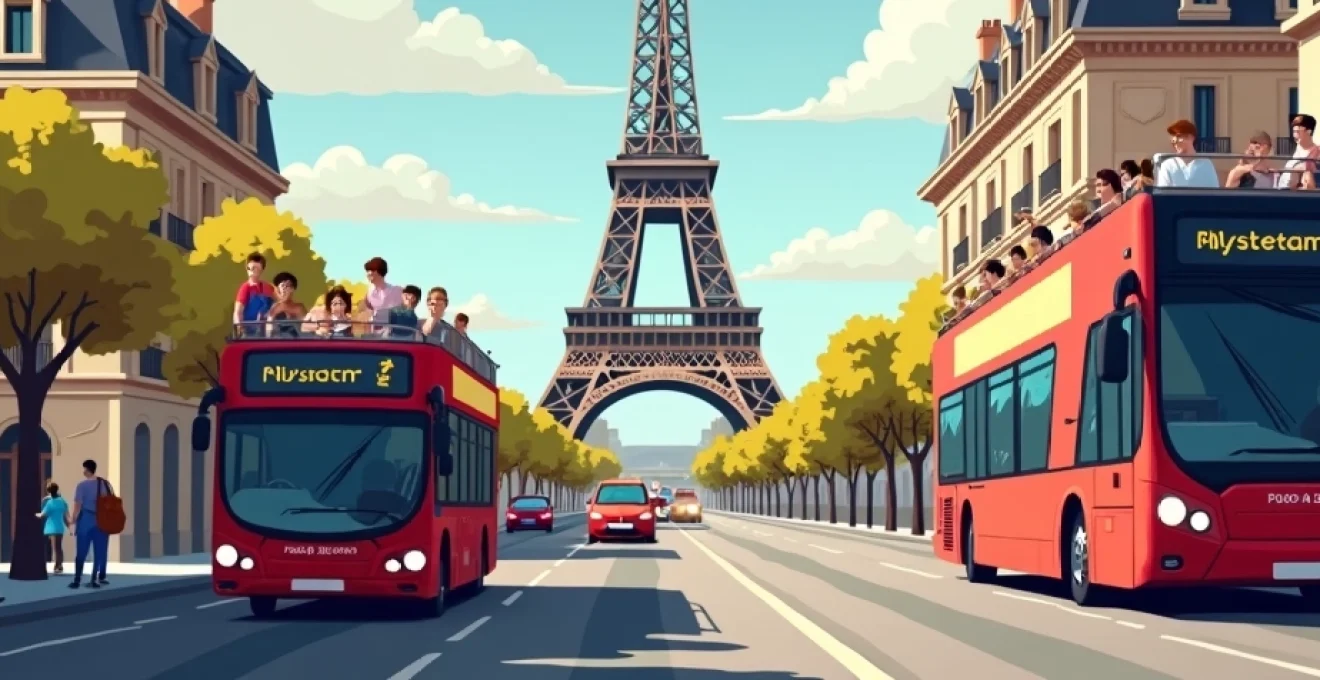
Paris stands as one of the world’s most captivating destinations, where centuries-old architecture meets modern urban sophistication. With over 130 museums, countless monuments, and neighborhoods each possessing distinct character, navigating the City of Light can feel overwhelming for visitors. The hop-on hop-off bus system transforms this challenge into an opportunity, providing tourists with unprecedented flexibility to discover Paris at their own pace while ensuring they don’t miss the essential landmarks that define this magnificent metropolis.
These double-decker buses operate on carefully designed routes that connect Paris’s most significant attractions, allowing travelers to board and disembark as frequently as desired throughout their visit. The convenience factor alone makes this transportation method invaluable for first-time visitors who want comprehensive city coverage without the complexity of mastering the metro system or walking extensive distances between distant landmarks.
Paris hop-on hop-off bus tour key information
Understanding the operational framework of Paris’s hop-on hop-off system enables visitors to maximize their sightseeing experience. The service typically operates from early morning until evening, with buses departing every 15-20 minutes during peak season and slightly less frequently during off-peak periods. Hop-on hop-off Paris tours generally offer multiple ticket durations, including 24-hour, 48-hour, and 72-hour options that provide unlimited boarding privileges within the selected timeframe.
The pricing structure reflects the extensive value these tours provide, with adult tickets typically ranging from €35-59 for single-day access, while multi-day passes offer better per-day value for extended stays. Children usually receive discounted rates, and family packages often provide additional savings for groups traveling together. Digital ticketing systems have streamlined the boarding process, allowing instant confirmation and eliminating the need for physical ticket printing.
Modern hop-on hop-off buses in Paris feature eco-friendly electric or hybrid engines, contributing to the city’s sustainability initiatives while providing quieter operation that enhances the touring experience. Free Wi-Fi connectivity enables passengers to share their discoveries in real-time, while complimentary headphones ensure comfortable audio guide listening without disturbing fellow travelers.
The hop-on hop-off concept revolutionizes urban tourism by combining the convenience of public transportation with the comprehensive coverage of organized sightseeing tours.
Weather protection comes standard with covered lower deck seating and retractable canopies on upper levels, ensuring comfortable travel regardless of conditions. Real-time bus tracking through dedicated mobile applications allows tourists to plan their movements efficiently, reducing wait times and optimizing their itinerary scheduling throughout their Paris adventure.
Explore Paris landmarks at your own pace
The fundamental advantage of hop-on hop-off touring lies in its flexibility to accommodate diverse travel preferences and energy levels. Unlike traditional guided tours that follow rigid schedules, this system empowers visitors to spend extended time at locations that captivate their interest while quickly moving past attractions that hold less appeal. Spontaneous exploration becomes possible when you can disembark to investigate an intriguing café, boutique, or street performance without worrying about rejoining your group or missing scheduled activities.
Photography enthusiasts particularly benefit from this flexibility, as they can return to locations during optimal lighting conditions or capture the same landmark from different perspectives throughout the day. The golden hour lighting that illuminates the Eiffel Tower at sunset, for instance, creates dramatically different photographic opportunities compared to midday visits, and hop-on hop-off access facilitates these multiple visits effortlessly.
Families traveling with children find this touring method especially valuable, as it accommodates varying attention spans and energy levels without the pressure of keeping pace with larger tour groups. When young travelers become restless or tired, parents can easily board the next bus and continue to destinations that might offer more engaging experiences for their children, such as parks or interactive exhibits.
The self-directed nature of hop-on hop-off touring also appeals to travelers who prefer to combine structured sightseeing with independent exploration. You might choose to follow the complete route during your first day to gain overall city orientation, then use subsequent days to focus intensively on specific neighborhoods or attractions that sparked your initial interest.
Freedom to explore at your own rhythm transforms sightseeing from a rushed checklist experience into meaningful discovery and personal connection with the city.
Hop-on hop-off routes cover major Paris attractions
Paris hop-on hop-off operators typically design their routes to encompass the city’s most iconic landmarks while ensuring logical geographical flow that minimizes travel time between attractions. The primary routes generally cover approximately 10-15 strategically positioned stops, creating comprehensive loops that can be completed in 90-120 minutes when riding continuously. This timing allows for efficient city overview tours while providing convenient access points for detailed exploration of individual attractions.
Route planning considers both tourist priorities and practical transportation logistics, ensuring that stops are located near major metro stations, parking areas, and pedestrian zones for seamless integration with other transportation methods. Strategic stop placement often positions buses within walking distance of multiple attractions, allowing visitors to explore several related sites during a single disembarkation period.
Eiffel Tower trocadero Champs-Elysees louvre museum
The western route segment typically connects some of Paris’s most internationally recognized landmarks, beginning with the Eiffel Tower area where stops provide access to both the tower itself and the Trocadéro Gardens. The Trocadéro stop offers the most spectacular vantage point for Eiffel Tower photography, with its elevated position creating the perfect backdrop for those quintessential Paris vacation photos that capture the tower’s full majesty against the city skyline.
From Trocadéro, the route generally proceeds toward the Champs-Élysées, stopping near the Arc de Triomphe where visitors can experience the grandeur of this famous avenue. The Champs-Élysées segment allows for luxury shopping, café visits, and appreciation of Haussmann’s distinctive architectural style that defines much of central Paris. Window shopping along this prestigious boulevard provides insight into Parisian fashion and lifestyle even for those not planning purchases.
The Louvre Museum stop represents one of the most significant cultural destinations on any Paris itinerary, providing access to the world’s largest art museum. Even visitors who don’t plan museum entry can appreciate the Louvre’s stunning exterior architecture and the iconic glass pyramid that creates such dramatic contrasts between classical and contemporary design elements.
Notre-Dame cathedral Latin quarter orsay museum
The central Paris route section focuses on the historic heart of the city, where Notre-Dame Cathedral serves as the geographical and spiritual center of Paris. Although the cathedral remains under restoration following the 2019 fire, the surrounding area continues to offer remarkable architectural heritage and the opportunity to witness this magnificent Gothic structure’s ongoing renewal process.
The Latin Quarter stop provides access to one of Paris’s most vibrant neighborhoods, characterized by narrow medieval streets, student life from the nearby Sorbonne University, and countless cafés and bookshops that embody the intellectual spirit of the Left Bank. Street performers and artists frequently animate the area around Place Saint-Michel, creating an ever-changing tableau of Parisian cultural life.
The Musée d’Orsay stop offers visitors access to the world’s finest collection of Impressionist masterpieces, housed within a spectacularly converted Belle Époque railway station. The museum’s manageable size compared to the Louvre makes it an excellent choice for art lovers who want comprehensive exposure to Monet, Renoir, Van Gogh, and other masters without the overwhelming scale of larger institutions.
Montmartre Sacre-Coeur Opera Garnier Place Vendome
The northern route extension typically includes Montmartre, Paris’s historic artistic quarter that retains much of its village-like charm despite its central location. The Sacré-Cœur Basilica stop provides access to both the stunning white-domed church and the bohemian atmosphere of Place du Tertre, where portrait artists and caricaturists continue traditions established by legendary artists like Picasso and Renoir who once worked in this neighborhood.
Opera Garnier represents the pinnacle of Second Empire architecture and serves as home to the Paris Opera Ballet and Opera companies. The stop provides convenient access for both performance attendees and architecture enthusiasts who want to admire the building’s ornate facade and, if time permits, take guided tours of the lavishly decorated interior spaces that inspired Gaston Leroux’s “Phantom of the Opera.”
Place Vendôme embodies Parisian luxury and elegance, surrounded by high-end jewelry boutiques, luxury hotels, and the prestigious Ritz Paris. The geometric perfection of this octagonal square exemplifies classical French urban planning, while the Vendôme Column at its center commemorates Napoleon’s military victories with bronze relief sculptures that tell the story of the 1805 Austerlitz campaign.
Audio guides provide insightful commentary onboard
Professional audio commentary transforms the hop-on hop-off experience from simple transportation into educational cultural immersion. Multiple language options typically include English, French, German, Italian, Spanish, and often additional languages such as Mandarin, Japanese, or Portuguese, ensuring accessibility for international visitors from diverse linguistic backgrounds. Native speaker narrators provide authentic pronunciation of French names and locations while delivering engaging historical context and cultural insights.
The commentary content generally covers architectural details, historical significance, cultural traditions, and contemporary relevance of each landmark encountered along the route. Professional historians and local experts often contribute to script development, ensuring accuracy and depth that goes beyond basic tourist information. Personal anecdotes and lesser-known facts add personality to the narration, creating connections between visitors and the city that extend beyond surface-level sightseeing.
Children’s audio programming has become increasingly sophisticated, featuring age-appropriate language, interactive elements, and storytelling techniques that maintain young attention spans while conveying educational content. These specialized programs often incorporate sound effects, music, and character voices that make learning about Paris history and culture entertaining rather than didactic.
Quality audio commentary elevates sightseeing from passive observation to active learning, creating lasting memories and deeper appreciation for the destinations visited.
Synchronized timing ensures that commentary aligns with actual landmark viewing, allowing passengers to absorb information while visually experiencing the described features. GPS-triggered narration automatically adjusts to bus location, providing relevant information precisely when corresponding attractions come into view. This technological integration creates seamless educational experiences that feel natural rather than mechanical.
Advanced audio systems often include noise-canceling technology that filters out traffic sounds and wind interference, ensuring clear narration even in busy urban environments. Individual volume controls allow passengers to customize their listening experience according to personal preferences and ambient conditions, while headphone jacks accommodate personal audio equipment for those who prefer their own devices.
Flexible ticket options suit different travel needs
Modern hop-on hop-off operators recognize that tourists have varying schedules, budgets, and preferences, leading to diverse ticketing structures designed to accommodate different travel styles. Single-day tickets work well for travelers with limited time who want comprehensive city overviews, while multi-day passes provide better value for extended visits and allow for more leisurely exploration of individual attractions and neighborhoods.
Combination tickets that include additional services such as Seine river cruises, museum entries, or evening illumination tours offer significant value compared to purchasing these experiences separately. These packages typically provide 10-15% savings while simplifying booking processes and reducing the need for multiple transactions throughout the visit. Bundle pricing strategies make premium experiences more accessible to budget-conscious travelers who want comprehensive Paris exploration.
Family packages often include special pricing structures that recognize the financial challenges of traveling with children while encouraging family tourism. These typically offer reduced rates for children under 12, with some operators providing free admission for very young children when accompanied by paying adults. Group discounts for parties of 10 or more provide additional savings for organized tours, school groups, or extended family gatherings.
Seasonal pricing reflects demand fluctuations and operational costs, with peak summer months typically commanding premium rates while shoulder seasons offer reduced pricing that can represent exceptional value. Advanced booking discounts reward early planners with savings of 10-20% compared to same-day purchases, while last-minute deals occasionally provide opportunities for spontaneous travelers to access discounted services.
Digital ticketing platforms have streamlined the booking process while providing instant confirmation and the flexibility to modify reservations when plans change. Mobile ticketing eliminates the risk of lost physical tickets while enabling quick boarding through QR code scanning. Flexible cancellation policies typically allow full refunds for cancellations made 24-48 hours in advance, providing peace of mind for travelers whose plans might change due to weather, health concerns, or schedule modifications.